Quick answer
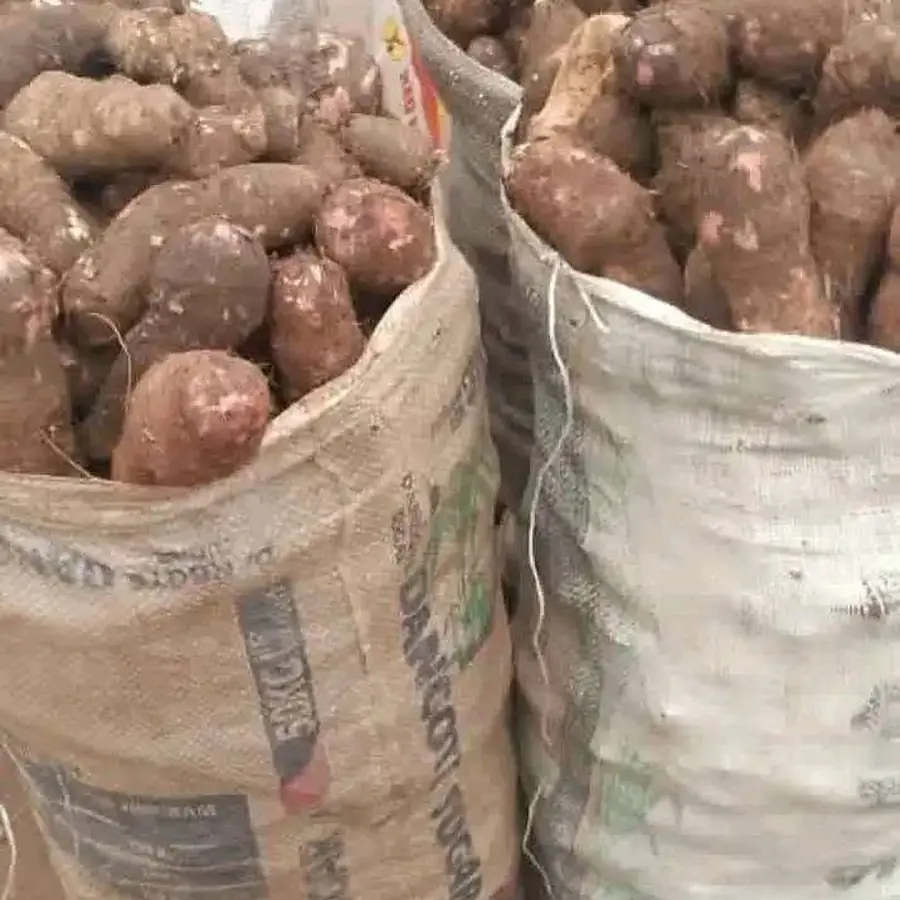
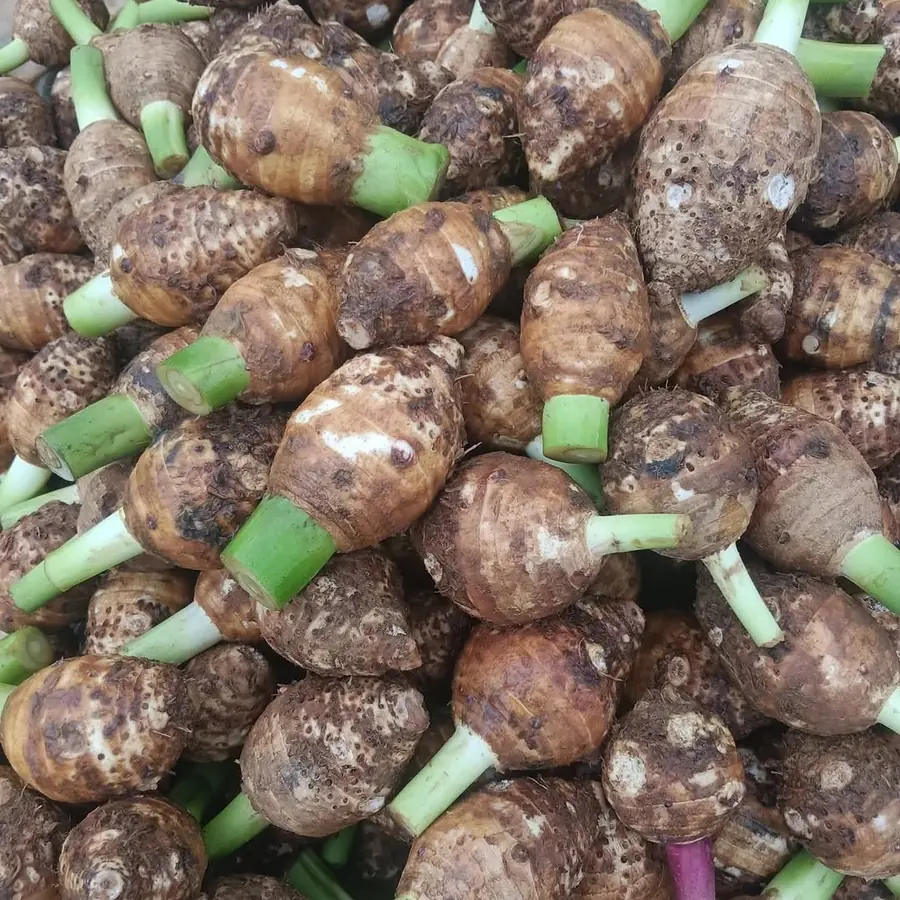
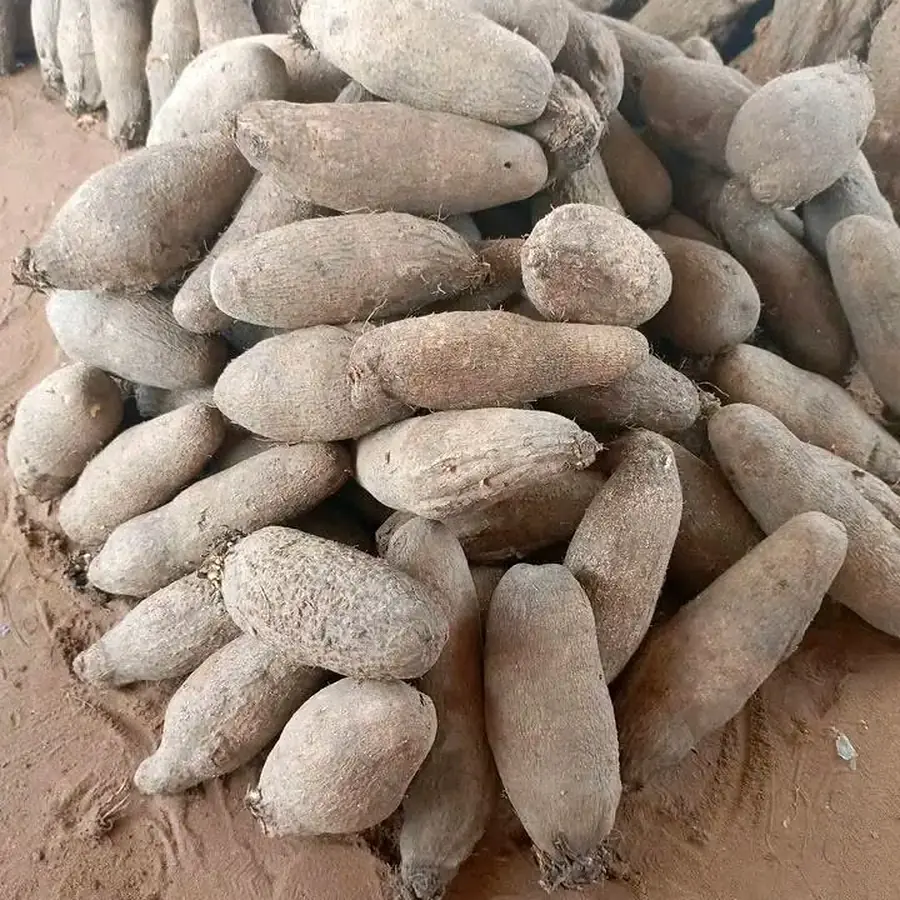
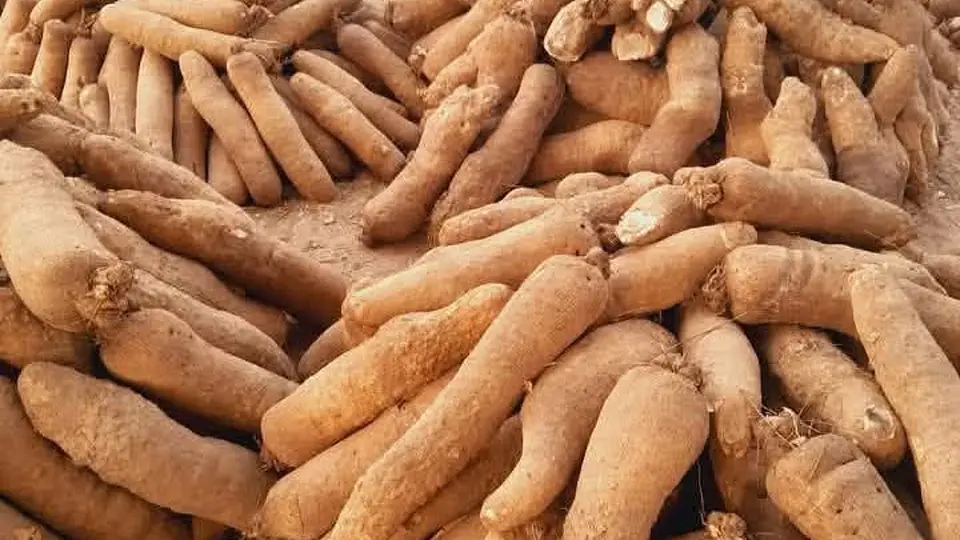
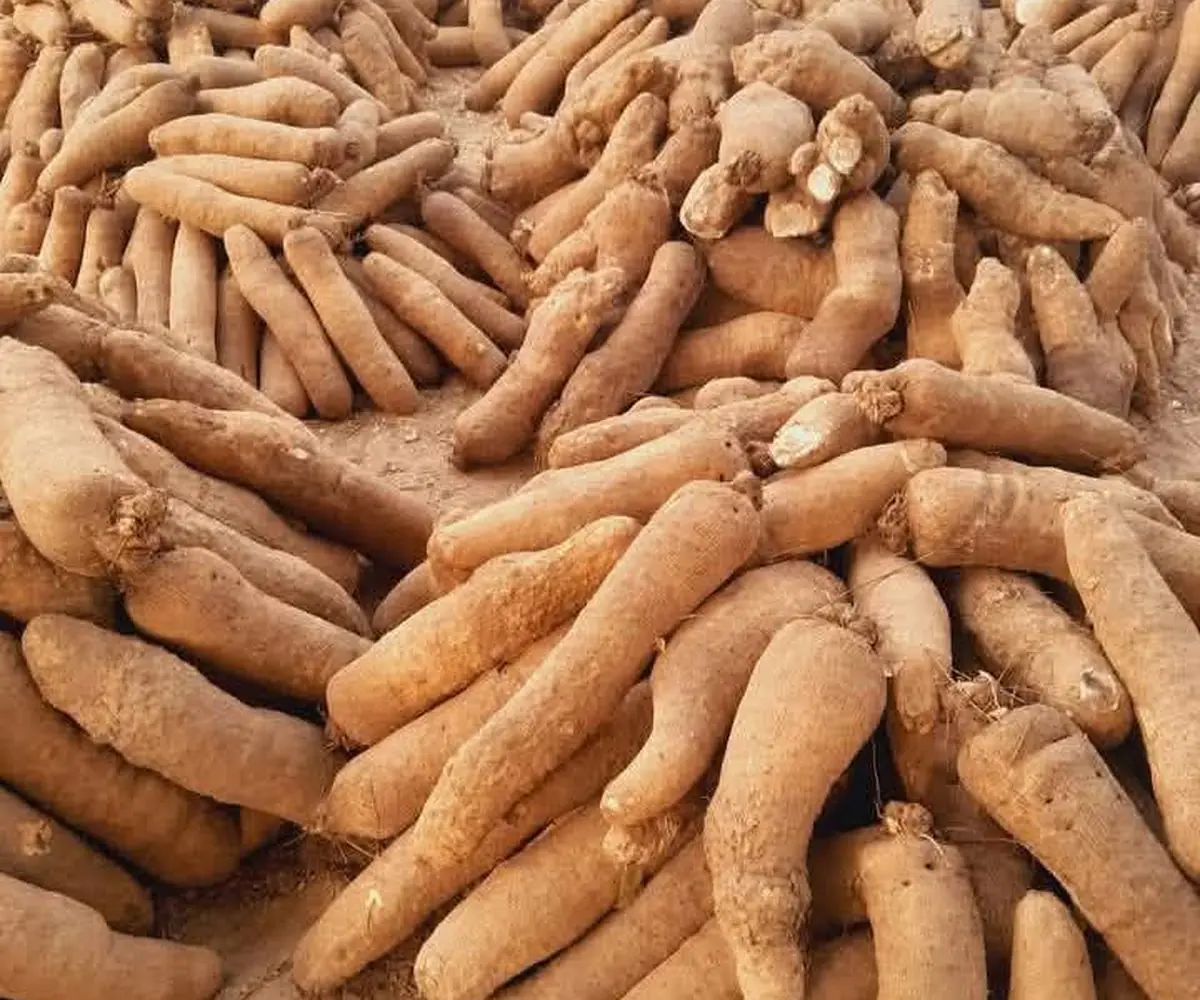
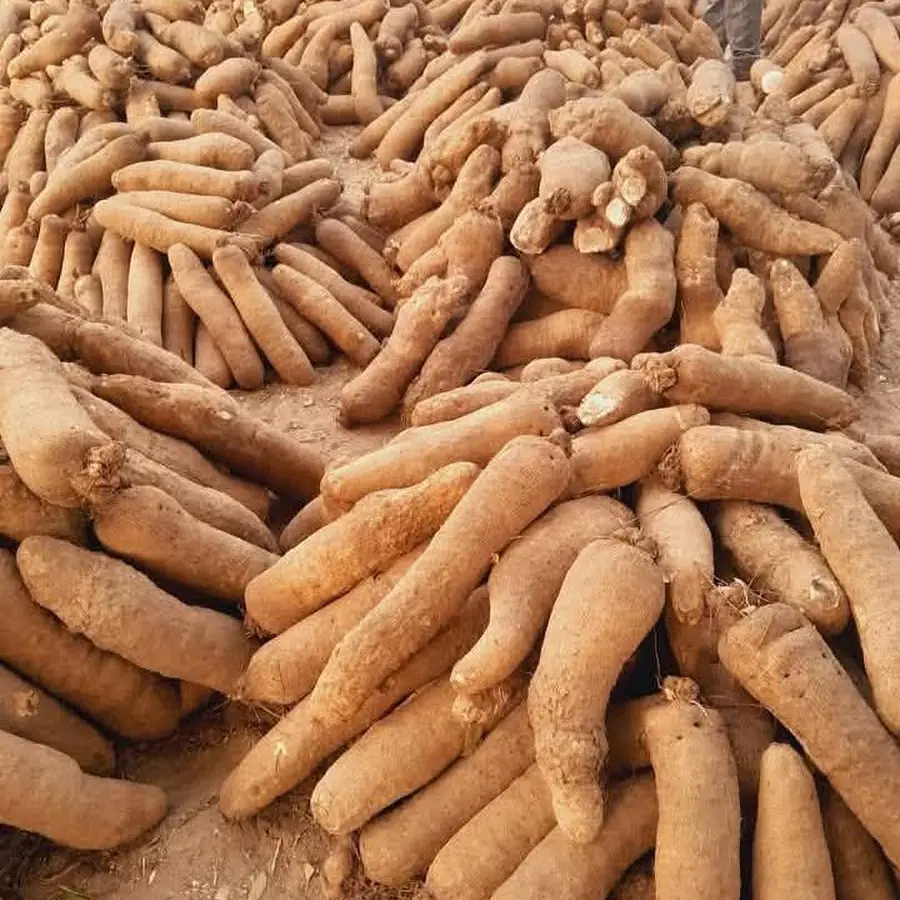
White yam (Pona): White yam keeps for several weeks. Boiled, fried or pounded, it goes with slippery soups and stews. Ours comes from Ngaoundéré, in Cameroon’s Adamawa region.
Key facts
- Name in French
- Igname blanche
- Scientific name
- Dioscorea rotundata
- Also known as
- Pona
- Origin
- Ngaoundéré, Vina · Adamawa
- Category
- Roots & tubers
- Type
- Raw
- Available formats
- Fresh, flour (yam powder)
- Delivery
- Fresh / frozen · group shipment
What is White yam?
White yam keeps for several weeks. Boiled, fried or pounded, it goes with slippery soups and stews.
Its scientific name is Dioscorea rotundata. It is also known as Pona.
Where does White yam come from?
Our White yam comes from Ngaoundéré, Vina, in the Adamawa region (capital Ngaoundéré). Growing areas in the region: Ngaoundéré, Meiganga, Tibati, Banyo. Every lot is checked and packed in Douala.
How do you cook with White yam?
Roots and tubers are boiled or steamed, pounded or grated. They go with sauces or become the base of the dish (achu, kwacoco, ekwang).
Pack size: 1 tuber · ~2.5 kg. Usual formats in Cameroon: fresh, flour (yam powder).
How should you store White yam?
Keep cool and out of the light. Best eaten soon.
Where to buy White yam in Europe, the US and Canada
A fresh or frozen product: it travels in our refrigerated group shipment, subject to each country’s import rules. We deliver to cities including Paris, Brussels, London, Montreal.
Frequently asked questions
What is White yam called in French?
In French: Igname blanche. Other names: Pona.
How do I store White yam?
Keep cool and out of the light. Best eaten soon.
Can White yam be shipped outside Cameroon?
A fresh or frozen product: it travels in our refrigerated group shipment, subject to each country’s import rules.
Is it organic?
We never say “organic” without certification. It is natural, traditionally grown, free of additives, and every lot is checked in Douala.